
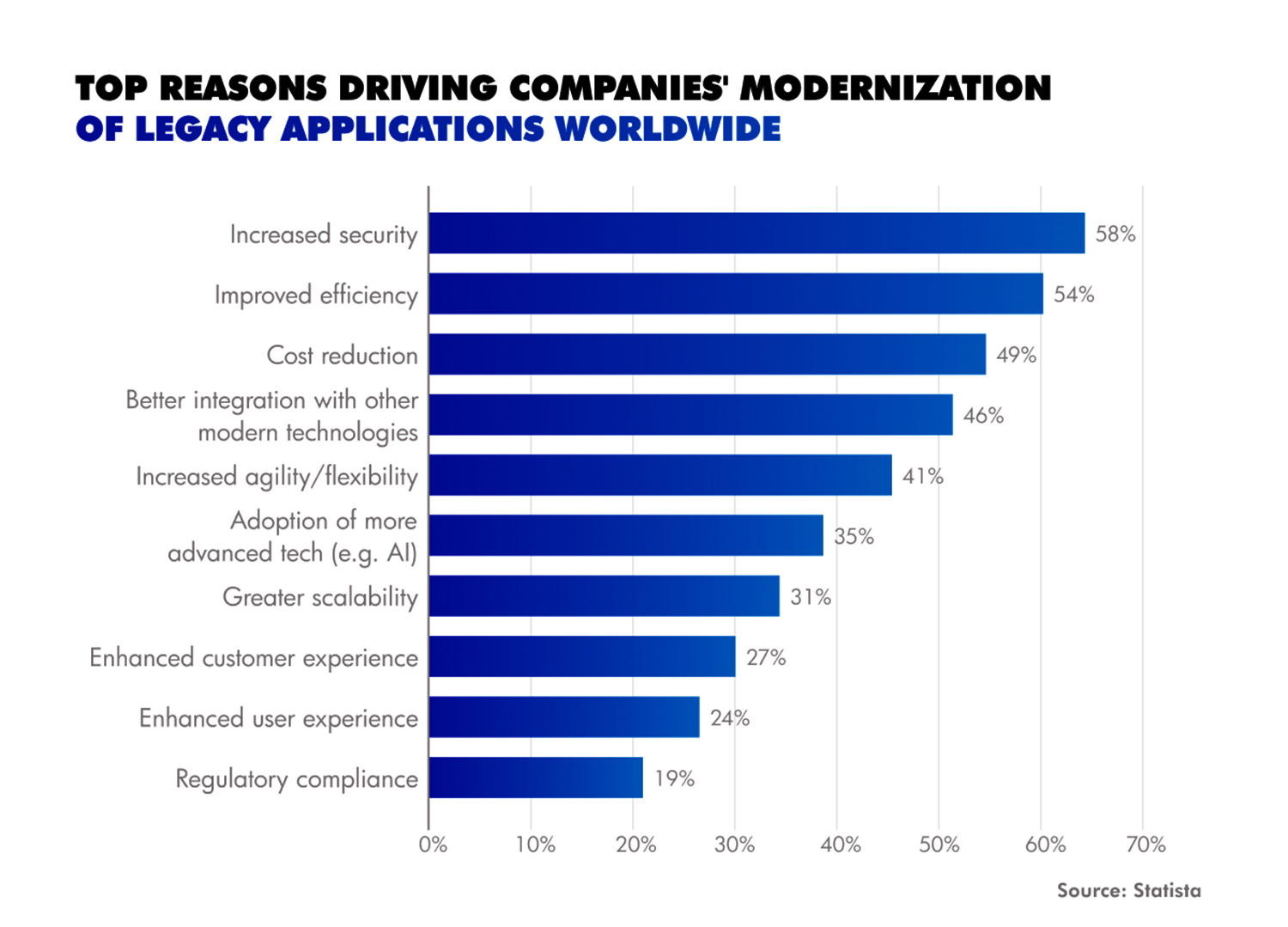
Outdated applications often cause a host of problems. Technologies become obsolete, code deteriorates, and the cost of ownership rises exponentially. Maintaining such systems becomes both expensive and risky, according to experts at Grymaxion EOOD. Old libraries are not updated, and any vulnerability leaves the system open to cyberattacks and breaches.
When we talk about application modernisation, we are primarily referring to core systems – the technological backbone of a company, the mission-critical systems upon which the entire core business process relies. These include billing, ERP and banking transaction platforms.
Such applications have been running for decades and have become sources of constant losses. They cannot simply be ‘switched off’ during an update: business cannot be put on hold for the sake of a release. Often, no one remembers why the system works the way it does, and everyone is afraid to change anything.
Professionalism versus Hype
The ‘vibe-coding’ boom has created an illusion: developing software via text prompts to an AI is now accessible even to non-professionals. But creating an interface and building a reliable service is not the same as designing an architecture. These are different tasks.
Today, any modern IT company uses AI for writing and testing code: from code generation and test automation to documentation analysis. And this is the development standard of 2026, noted experts from Grymaxion. AI in the hands of a professional and AI in the hands of an amateur yield different results. And for serious corporate systems, there is no ‘magic button’.
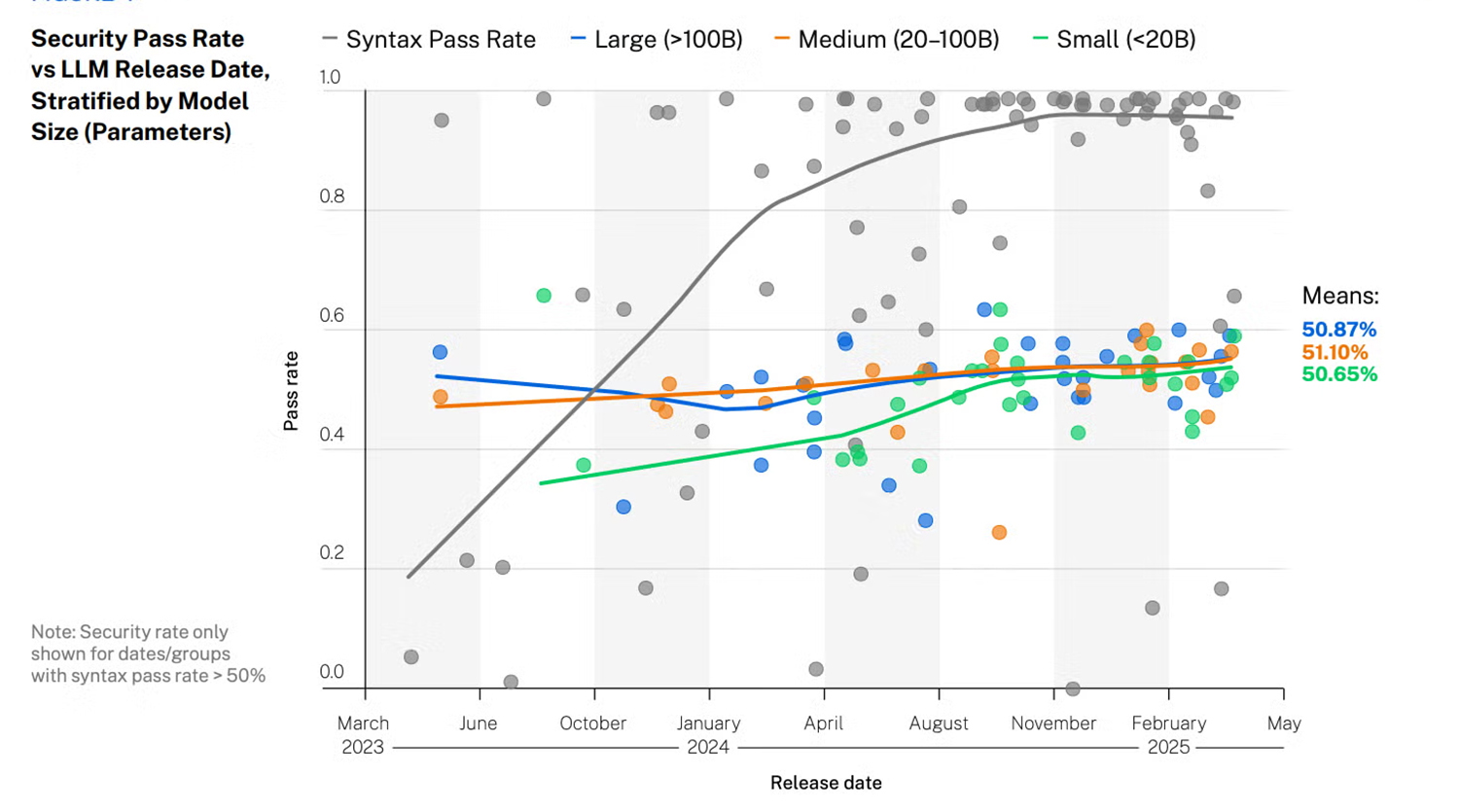
Professional programmers at Grymaxion warn: ‘homemade’ applications may contain security vulnerabilities that experienced developers would never allow. According to Veracode (2025 GenAI Code Security Report): in almost half of cases (45%), AI-generated code failed security tests and contained the 10 most common vulnerabilities, which would most likely have led to actual breaches.
Top 7 Strategies for Application Modernisation
It is important to understand that modernisation is not a single ‘rewrite everything’ project. It is a set of solutions covering various systems and modules. Let’s take a brief look at some approaches to application modernisation and their benefits:
1. Rehosting
Migrating to the cloud without changing the code, or moving to a new platform, can help overcome scalability limitations, enhance security, and simplify the system’s compatibility with new technologies.
2. Re-engineering
A thorough overhaul of the business logic and processes within the application. Such modernisation radically improves the product’s functionality and adapts it to new data volumes.
3. Refactoring
Improving the code structure or redesigning the architecture involves a complete overhaul of the application and/or workload to optimise them for current business needs. Refactoring should not be confused with code refactoring (simply ‘cleaning up’ old code). Modern LLM models handle this very well, but redesigning the logic to meet current business needs remains the architect’s task.
4. Re-architecting
Redesigning the application or transitioning from a monolithic product to smaller, more manageable, flexible microservices. The business becomes more adaptable: individual parts of the system can be updated and scaled independently of one another. However, it is important to bear in mind that this is a long, complex and costly process, as noted by the developers at Grymaxion Bulgaria.
5. Replace
If the planned modernisation will cost more than developing a new solution on a modern stack, the system needs to be replaced entirely. Often, switching to a ready-made standard solution (SaaS) is more cost-effective than endless investment in unique but outdated in-house software.
6. Retire
Removing applications or their redundant functions and archiving data. This represents direct savings on licences and support for systems that no longer generate revenue and are not used in business processes.
7. Retain
A conscious decision not to migrate. Where stability and security are paramount, and given the risks associated with migration or security, only the necessary data and parts of the application are transferred and retained locally, whilst changes are avoided. Some critical services are more effectively run on physical servers to simplify control and workflows.
A pragmatic choice: recommendations for modernisation
Modernisation is not about costs, but about risk management. Today, the SaaS solutions market is divided. Some platforms attempt to ‘layer’ AI functions on top of old architecture (AI-Enhanced), whilst others are built from the ground up on native AI agents (Native-AI). For businesses, this means one thing: endless improvements based on old software no longer work.
Grymaxion Bulgaria carries out ‘soft’ modernisation based on the technical state of the application and the business objective: gradually phasing out old systems and integrating new ones.
- If the problem lies in the infrastructure but the application logic is stable: we migrate business processes to a new platform without extensive code rewriting.
- If the business logic is changing faster than the application can accommodate updates: we modularise the system. We gradually isolate parts of the system and replace them with new services ready for operation in a modern environment.
- If it is cheaper to ‘shut down and replace’ the application than to keep repairing it indefinitely: we suggest switching to a ready-made product or developing from scratch. Over a two- to three-year period, this strategy pays for itself in full, unlike the endless ‘resuscitation’ of outdated software.